

Introduction
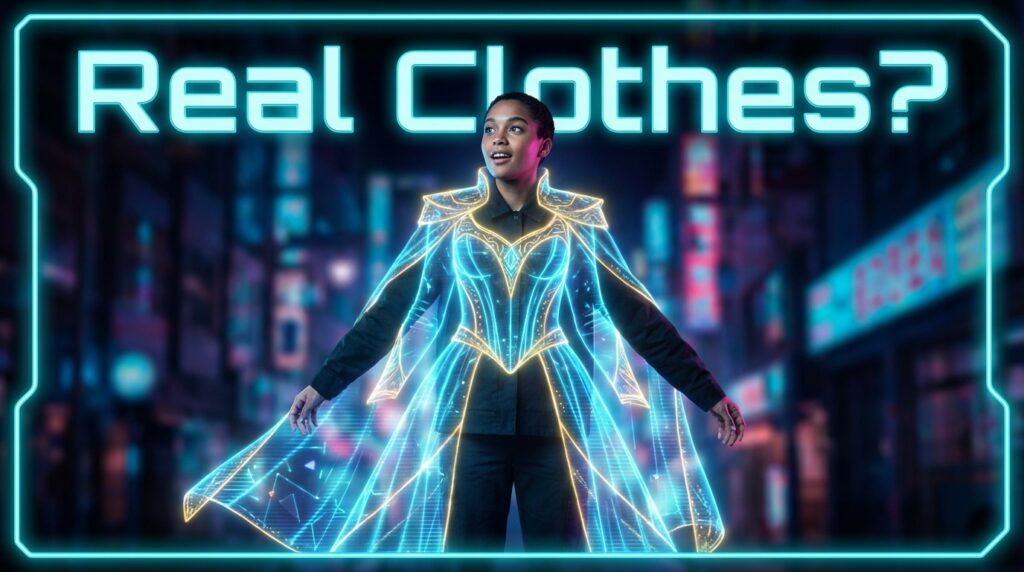
Let’s be clear About AI Fashion Trend. How many pieces of clothing are actually in your closet at this very moment that were purchased, used once for an Instagram shot, and then relegated to the depths of storage space once more?
If you’re like most people, the answer is “too many.”
For years, fashion has lived off a vicious cycle of buying, posting, and disposing. Big fast-fashion companies churn out polybutadiene clothes to satisfy our craving to share new posts, all to the detriment of the planet. Not so in 2026. A new chapter has begun. Welcome to the world of AI Fashion.
We’re not just talking about digital skins for gaming. We’re talking about hyper real, AI-generated virtual clothes that fit perfectly over your real photos and videos. It’s the perfect solution for the digital age: look fabulous online, feel comfy (and sustainable) offline.
The AI Fashion movement is dramatically changing the worldwide industry of clothing, currently estimated at a value of $2.5 trillion. From ‘Phygital’ hoodies to augmented reality dressing room mirrors, here’s how pixels are becoming the new polyester – and why you should care.
Table of Contents
- Introduction
- What Is AI Fashion? (It’s Not Just NFTs)
- The End of Fast Fashion? Sustainability Stats
- How Virtual Try-On (VTO) Became Standard
- The Rise of “Phygital” Goods
- Gaming: The New Runway
- Digital Influence: The “Zero-Waste” Influencer
- Economic Shift: Investing in Digital Assets
- FAQs
- Final Verdict
What Is AI Fashion? (It’s Not Just NFTs)
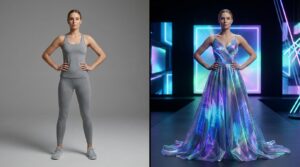
A few years ago, something called ‘digital fashion’ emerged as a hype item: overpriced JPGs and bulky metaverse avatars. Now in 2026, it is useful and not merely fashionable.
AI Fashion refers to clothes that are designed by Artificial Intelligence and exist only in the virtual world. This is because it is now possible, thanks to advancements in technology, through generative artificial intelligence to create wearable fabrics that float or even shine.
However, true value exists in terms of utility.
On-Body Overlay: You take a picture of yourself wearing a plain T-shirt, upload it to a fashion app, and instantly, thanks to AI technology, a $5,000 digital couture gown falls on top of your body shape. The lighting, shadows, and fabric dynamics are all perfect.
The end-result: standout social content without any cost, shipping, or waste.
The End of Fast Fashion? Sustainability Stats
The fashion world ( AI Fashion Trend ) has long had a rather steep price to pay to the environment. The old “wear it once” approach? Not sustainable. Well, we finally have the pivot we’ve all been waiting for: virtual clothing.
The impact that pops into our imagination: How about that with your digital shirt, you’ll emit about 97% less CO2 than if you were to make a real cotton one? Water usage? Digital clothing saves approximately 3,000 liters per garment, since no farming was necessary.
By 2026, these thoughtful consumers are acting on a Digital-First philosophy. That means they’re rounding up on durable physical essentials like jeans, tees, and coats to wear in the real world, and building up their digital wardrobes in bold, imaginative ways to present themselves online. This means no more low-cost, disposable party wear.
How Virtual Try-On (VTO) Became Standard
Remember the days of online shopping mayhem from 2023 when consumers tried out various sizes and returned the majority of the purchases? Those days are over. Today, AI-Powered VTO is the standard in the entire shopping world, from Zara to Gucci. AI Fashion Trend
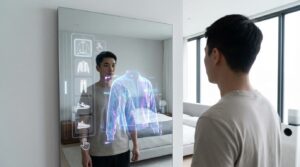
The technology is very basic: a smartphone equipped with LiDAR technology scans you, and then AI technology generates a millimeter-precise 3D model of your body.
This is an experience to remember, as you do not merely catch a brief, frozen glimpse of the dress, but see it on your own body, in motion, in real time. You can see exactly how it clings, or becomes looser, and the way the fabric falls on your body as you move.
Since entering the mainstream, returns on “poor fit” have decreased by more than 40% across the world. If they’re not offering AI try-on, they will be dinosaurs in no time, and 2026 is only around the corner.
The Rise of “Phygital” Goods
We are in a world where physical and digital converge, and as such, our wardrobe should also. That brings about the concept of Phygital—Physical plus Digital as one.
Luxury houses have already excelled in this domain. Wear a special edition of a hoodie, like the ones offered by RTFKT and Balenciaga in the real world, and you will find a chip embedded inside the sleeve. AI Fashion Trend
Tap the chip, and the hoodie’s virtual twin pops into existence, ready for your avatars or AR filters.
However, the asset goes beyond that. What you are acquiring is an object that can be taken with you wherever you browse the internet.
That change has created a huge market for resales. The physical form may wear out, but the digital form will always be there on the blockchain.
Gaming: The New Runway
Forget the runways of Paris for a second. The AI Fashion Trend of 2026 are happening on GTA,Roblox, Fortnite, and The Sandbox.
Gen Z and Gen Alpha are hanging out in game lobbies more and more rather than at the mall. Therefore, their obsession isn’t about school clothes; it’s about the drip on their avatars.
This is just some of what this scale looks like: “Bypassing retailers altogether, designers are delivering collections direct to games. The revenue potential of a $20 digital sneaker drop in Fortnite, for instance, can be more than a flagship store makes in a year—across ten minutes.”
A note of accessibility: the kid in rural Ohio can rock the same digital designer stuff like the kid in Tokyo. Luxury, and it’s democratized.
Digital Influence: The “Zero-Waste” Influencer
The world of fashion influencing has evolved. No longer does it feature endless shipments, unboxing videos, or cardboard boxes galore.
The trend today among prominent leaders is towards Zero Waste Content.
They wear a “green screen” suit or simple clothing.
They rely on AI to create many outfits in a single video.
They include links to the digital assets so fans can “wear” them as well.
This change relieves the burden of continued consumption for the influencer to carry on with their role. Creativity can be achieved without any wastage. We’ve seen a whole industry segment emerge for “Virtual Styling” of ( AI Fashion Trend ) Public Influencers.
Economic Shift: Investing in Digital Assets
AI Fashion Trend is turning into a tradable asset class.
Because digital couture can be verifiable on the blockchain (NFT), it has inherent scarcity value.
The Collectors: People accumulate their own “Digital Closets” worth thousands of dollars.
The Renters: If you can’t afford a digital dress for $2,000, you could rent one for 24 hours in 2026 just to use a picture of it. Smart contracts would facilitate a payment for that rental period. The digital file would expire at the end of use.
It’s a circular economy that exists solely in servers, generating real wealth for creators and collectors.
FAQs
But what if AI Fashion Trend isn’t just a filter? From a technical standpoint, it isn’t, but nonetheless, the difference is in the details. A standard Instagram filter simply overlays on top of you, but it doesn’t use any body tracking physics for its work. If you hold up an arm, the fabric doesn’t fold and crease like it would with silk or denim, for example. On a photograph, it doesn’t look remotely real.
Can you wear virtual clothes during a call via Zoom? Yes! This will be one of the most used cases by 2026. This feature comes with Digital Business Wear; you can work remotely while appearing on camera dressed in a neat suit despite being in your pajamas. The artificial intelligence will sense your moves.
Does this threaten traditional designers? Not at all—it frees them. Traditional designers are beholden to gravity and fabric costs. Digital designers can design dresses made of water, fire, or floating glass. It will open up a whole new world of design possibilities with the only constraint being imagination.
Final Verdict
The AI Fashion Trend is no joke. It is the natural progression of a world that exists online.
We have finally come to the realization that we don’t have to ruin the real world to look good in the virtual world. Whether you are a gamer, an influencer, or just someone who dislikes doing laundry, virtual clothing is the smarter, cleaner, and cooler way to express yourself.
The next time you see a beautiful outfit on your feed, instead of asking “Where can I buy that?” ask “Where can I download that?”
Have you tried a Virtual Try-On yet?
External Authoritative Sources
-
Vogue Business Technology – For industry news on fashion tech.
-
The Business of Fashion (BoF) – For economic analysis of the digital fashion market.
-
DressX – The leading platform for digital-only fashion retail.