
Introduction
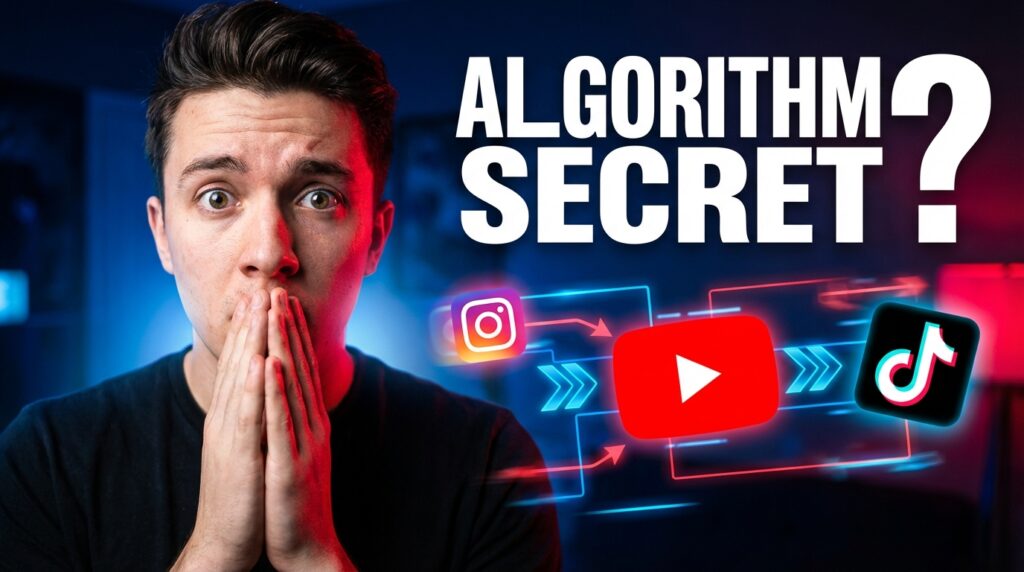
Sorry, but it’s time to face reality: sharing a picture with 30 hashtags and hoping it goes viral is obsolete. ( Social Media Algorithms )
If you’re still using the 2024 playbooks in 2026, then you are essentially invisible. The game has changed. We are no longer in “algorithms,” folks. We are in “Predictive AI Models.”
Social platforms ( Social Media Algorithms ) in 2026 don’t just react to what you click on; now they anticipate what you’ll want before you even know it yourself. And the shift from pursuing Engagement to pursuing Satisfaction has rewritten the entire rulebook.
I’ve spent the past year digging in on the latest API leaks, studying white papers from both Meta and ByteDance, and experimenting with concepts in my own channels. Here’s how things really work today, and how you can finally win against them.
Table of Contents
- Introduction
- The Core Shift: From “Attention” to “Value”
- Social Search is the New SEO
- Platform Breakdown: TikTok, Instagram & YouTube
- The Death of Hashtags (And What Replaced Them)
- The “Authenticity Score” vs. AI Slop
- Community & The “Dark Social” Factor
- How to Hack the Algorithm in 2026
- FAQs
- Final Verdict
The Core Shift: From “Attention” to “Value”
For a decade, the game was about “Time Spent.” If you could lock somebody in for three hours, you were winning. In 2026, the cue is “Satisfaction.” Social Media Algorithms
Companies woke up to the burnout that comes from clickbait and endless traps. Today, AI isn’t judging by minutes watched alone; it tracks:
- Retention Rate: whether they watched the video until the end of it.
- Return Rate-whether they swung back to your profile the next day or not.
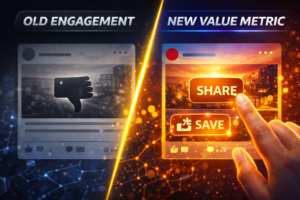
Actionable value – did they save it for later or share it with a friend? The guiding rule in 2026 is straightforward: a video that has 1,000 views with 500 saves outcompetes one that has 10,000 views with 10 saves. The algorithm aspires to be useful, not just addictive.
Social Search is the New SEO
( Social Media Algorithms ) If there’s one thing to take away from this blog, let’s make it this: Google sits with the boomers; social feeds are where the answers live for Gen Z and Alpha.
Today, Gen Z and Alpha don’t bother “Googling” a restaurant or a tech review. They go hunt it on TikTok or Instagram. That shift has turned algorithms into the new search engines.
Visual indexing means AI will view each frame of your video and read the text on your shirt, notice signs in the background, and locate the product on your desk.
Audio transcription means it captures all of the words you utter.
Semantic understanding: in interpreting slang such as “sick kicks” as “cool sneakers.”
That means if you’re not optimizing both your spoken keywords and the text that appears on screen, you fade to invisibility when it comes to search.
Platform Breakdown: TikTok, Instagram & YouTube
TikTok 2026: The “Retention” Engine
The platform is no longer focused on quick 15-second dance videos. The new vibe is more long-form: a minute or longer of engaging storytelling.
-
Why? The longer videos will keep viewers on the app for longer periods of time, which means more ads and a higher revenue stream for the app.
-
The Signal: if a person consumes a 3-minute video from start to finish, this will be a “Super Signal” and the algorithm will immediately unleash your content on millions of users similar to this person.
Instagram 2026: The “Friendship” Engine
Instagram was losing momentum, hence the shift. Come 2026, the algorithm will reward DMs and Shares.
-
The Test: Create a Reel, and the system will preview it to your Close Friends. If they share the DM with another user, the post could blow up; if they glance through it, it dissolves.
-
Strategy: Write stories that say, “This reminds me of you,” or “We should go there.”
YouTube 2026: The “Satisfaction” Engine
Now, YouTube’s AI is asking users: “Was this video worth your time?” Clickbait has a penalty. The algorithm favors deep dives and personalities.
The Death of Hashtags (And What Replaced Them)
So, relax, #FYP. As of 2026, no more hashtags used for increasing visibility, just for identification. Putting #Viral does not matter. ( Social Media Algorithms )
What replaced them?
-
SEO Captions: Develop 2-3 sentences with natural keyword use.
-
Alt Text: Include manual detailed descriptions of all the images.
-
Spoken Hooks: Specify the subject in the first three seconds of a video.
The “Authenticity Score” vs. AI Slop
The web is overflowing with AI-generated junk—what people are terming AI “Slop.” And in the battle against that, platforms have unleashed something largely unseen: an Authenticity Score.
-
Human Face/Voice: A real face and a natural voice get a little lift.
-
Original Metadata: clips taken straight from a camera roll do better than re-uploaded, generic clips.
-
AI Watermarks: if the platform catches you using entirely AI generation and not labeling it, then it caps your reach.
Community & The “Dark Social” Factor
“Dark Social” is basically that traffic analytics do not track, and it is shared through private messaging services like WhatsApp, Telegram, Discord, and IMessage. As of 2026, algorithms don’t have an eye on what you have shared through your private messaging services, but as you click on that share button, they do recognize it. As your shared content is considered lucrative, CTAs like “Send this to a friend who needs to hear this” hold great significance in 2026.
How to Hack the Algorithm in 2026
Stop trying to “hack” it and start feeding it.
-
The “Hook-Retain-Reward” Structure:
-
Hook (0-3s): Craft an experience with interruptions in vision and sound.
-
Retain (3s-60s): The pace must be maintained by moving the camera swiftly,
-
Reward (End): Provide the genuine answer or value you initially promised.
-
-
Reply to Comments with Video: This will create a cycle of self-sustaining content that the AI sees as high engagement.
-
Post “Searchable” Content: Make videos that answer specific questions, e.g., “The Best Gaming Monitor Under 500 Dollars In 2026?” rather than vlog content.
FAQs
1. Posting time is not really important in 2026?
There are algorithms that respond to interests and not necessarily to posting times. Therefore, a good post has the potential of skyrocketing weeks later.
2. Is the AI content banned?
Not really. It’s more stratified. It’s OK for high-effort AI artifacts such as pictures or videos, but spammy low-cost AI output will shadow ban you from reaching new users. So, add your own flair!
3. How frequently do you post?
Quality beats quantity any day of the week. In today’s context, three good videos a week is better than one good video per day repeated for three days. The algorithm penalizes viewers getting bored of repetitive dull content.
Final Verdict
The 2026 algorithm Social Media Algorithms is not some sort of enemy; it’s a reflection. It reflects what your audience values.
Instead of “shadowban,” do you see your viewership declining? Then check your retention. The creators winning in 2026 aren’t chasing viral sensations; they’re building trust. They prioritize Search, Saves, and their community of people, not metrics.
Interested in revolutionizing your strategy? Check out your analytics, identify your top Shared post, and come up with five more along the same lines.
External Authoritative Sources
-
Instagram Creators Blog – Official news on ranking signals.
-
TikTok Newsroom – Updates on community guidelines and search features.
-
Hootsuite Digital Trends Report – Data-backed analysis of global social media usage.



Pingback: Best Time to Post on Social Media in 2026 GMSR Entertainment
Pingback: How Short-Format Sports Leagues Are Dominating in 2026